
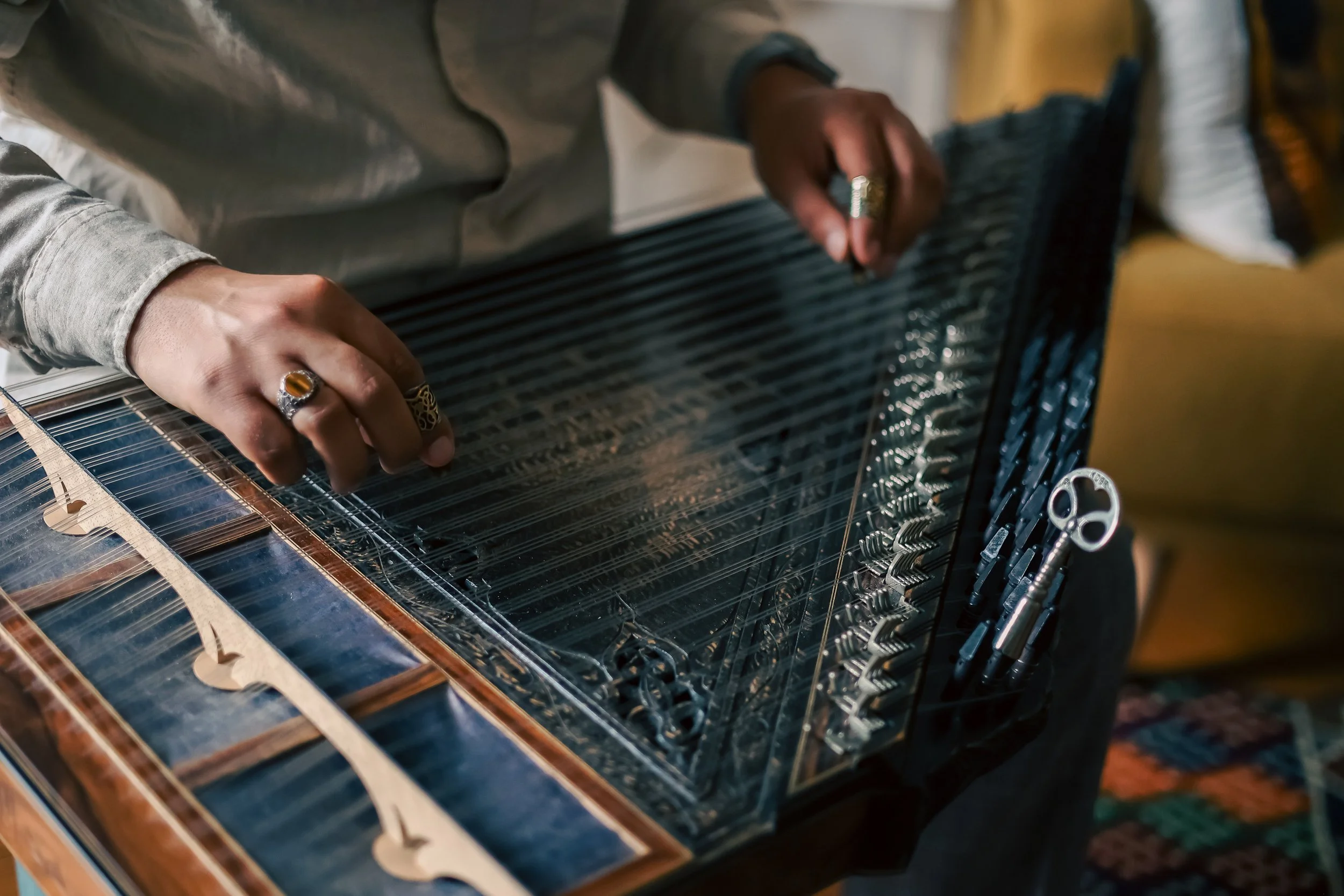
A maqam is much more than a simple sequence of notes
It is a living framework for melody, often compared to a tree. The root melodic element is the jins (pl. ajnas), which provides a solid foundation that anchors the music, while the upper ajnas branch out, offering variety and expression. A maqam is defined by four pillars: a specific "alphabet" of tones and microtones, gravity centers such as the qarar (the home base where the melody resolves) and the ghammaz (a modulation pivot), melodic direction (sayer), and melodic models with recognizable phrases that form the vocabulary of the tradition. Together, these elements create a distinct ethos—an emotional signature capable of stirring the heart or guiding a listener into saltana, a state of deep creative ecstasy.

Supporting this melodic structure are the Usul, the rhythmic cycles that serve as the heartbeat of Arabic music. These rhythms are deeply intertwined with the Tafa’il (prosody) of Arabic poetry, where the musical meter mirrors the quantitative patterns of long and short syllables. This connection creates a seamless bond between the word and the note, giving the music a linguistic quality. Because the rhythmic cycle dictates the breath and weight of the melody—much like a poet follows a meter—the music carries the inherent balance and tension of the Arabic language, allowing the listener to "read" the rhythm as if it were a spoken verse.
Classical Arabic music appears in a variety of forms, often associated with specific usul. Among these forms, the Bashraf introduces the wasla (musical suite) and is composed of multiple movements (khānāt), traditionally performed with long rhythmic cycles, although simpler usul became common in Arabic interpretation in the early 20th century. Another form, the Samai, typically consists of four khānāt and is based on the ten-pulse samā‘ī thaqīl rhythmic cycle, with the fourth khana performed in a different rhythm. An older version, the samā‘ī dārij, which emerged in the 17th century, remains widely performed using the dārij usul. The Longa, shared with the Turkish tradition, is known for its rapid tempo and multiple refrains, highlighting the virtuosity of the performers. The Taqsim is an improvised instrumental form that demonstrates the performer’s intimate connection with the melody. The term taqsīm has deep roots in early Arabic music theory, originally referring to the scansion (qisma) of poetry according to melody. A taqsīm can be either free of rhythm (mursal) or follow a rhythmic cycle (mowaqa’).